10 // LATTICE-CONFINED NUCLEAR REACTIONS
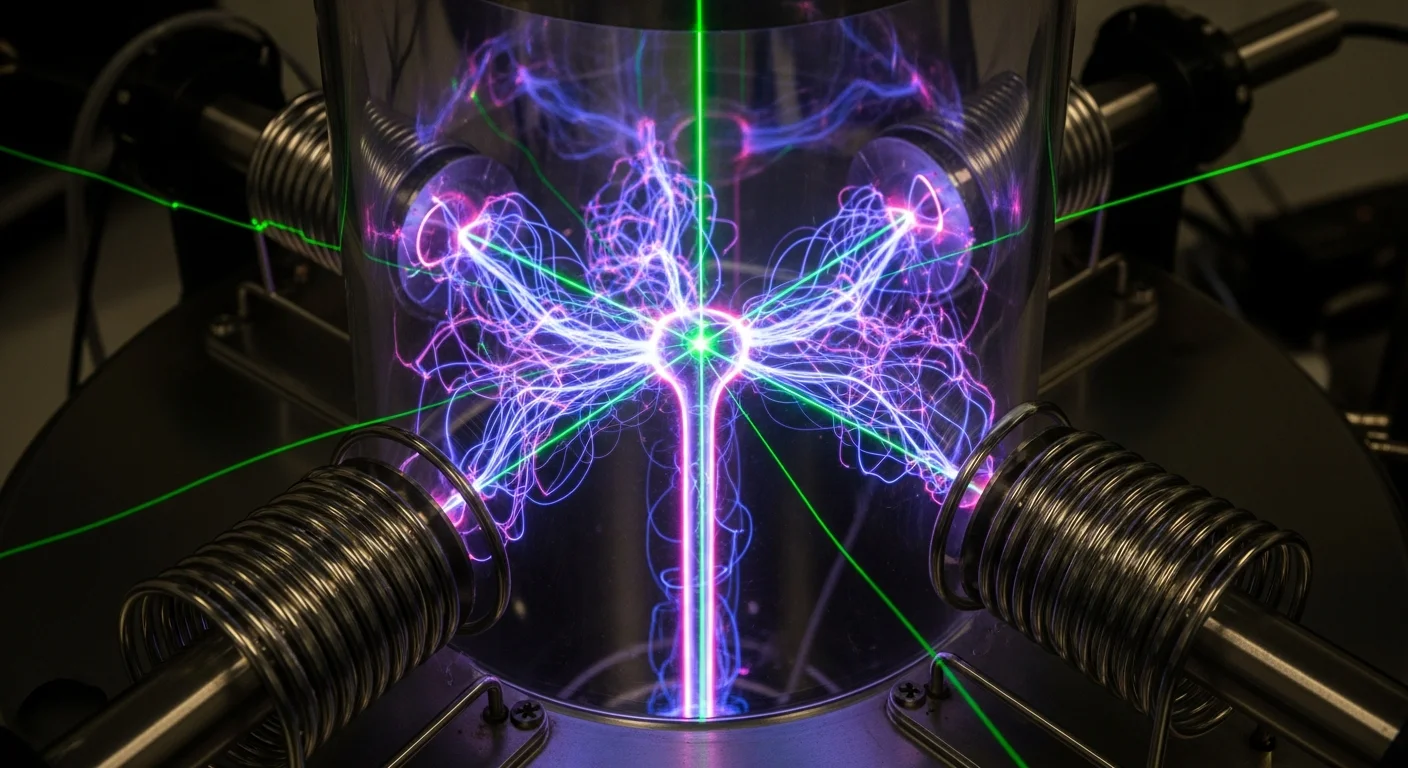
In parallel with the Dense Plasma Focus programme, Stellar Furnace maintains a small research effort on lattice-confined nuclear reactions (LCNR) — the phenomenon formerly and controversially known as “cold fusion.” The terminology matters: LCNR describes nuclear reactions occurring within a metal lattice at energies far below the Coulomb barrier, mediated by lattice phonon coupling and electron screening effects that are absent in free-space plasma. It is not the same physics as the SF-1. It may be complementary.
The experimental basis is now substantial. NASA Langley Research Center published peer-reviewed results (Widom-Larsen theory, validated by Lattice Energy LLC) demonstrating that heavy-electron capture by protons in a palladium-deuterium lattice produces ultra-low-momentum neutrons — neutrons with de Broglie wavelengths comparable to the lattice spacing, enabling nuclear transmutation at room temperature without the energetic neutron flux that characterises conventional fusion. The process is exothermic. The excess heat is real, reproducible, and has been measured by multiple independent laboratories.
Stellar Furnace’s LCNR programme focuses on three areas:
Lattice loading optimisation. Using Metallic Sciences single-crystal palladium substrates with controlled defect density to achieve deuterium loading ratios above 0.9 (the threshold above which excess heat is consistently observed). Electrochemical loading, gas-phase loading, and ion-beam implantation are all under investigation.
Calorimetry at scale. The historical controversy around LCNR was largely a calorimetry controversy — were the excess heat measurements real or artefactual? Modern flow calorimetry with calibrated Joule heating references resolves this question definitively. Our calorimetry rig, built by Phase Flash, measures thermal output to ±50 mW over 1,000-hour continuous runs.
Neutron detection. If Widom-Larsen theory is correct, ultra-low-momentum neutrons are produced during lattice-confined reactions but are immediately captured by nearby nuclei, producing no detectable neutron flux outside the lattice. We are developing boron-10 neutron absorber arrays integrated directly into the palladium lattice structure to detect these neutrons in situ — a measurement that has never been achieved.
LCNR, if scalable, would represent a fundamentally different energy source from the SF-1: low-temperature, solid-state, and intrinsically safe. It would not replace the DPF for high-power-density applications (propulsion, industrial heat). It could replace it for distributed low-power applications — building heat, remote sensors, space probes — where the SF-1’s complexity is disproportionate to the power requirement.
ENGINEERING THE STAR
A TECHNICAL WHITE PAPER ON ANEUTRONIC FUSION POWER
STELLAR FURNACE — A DIVISION OF LAKS INDUSTRIES
Prologue
The Fire That Powers Everything


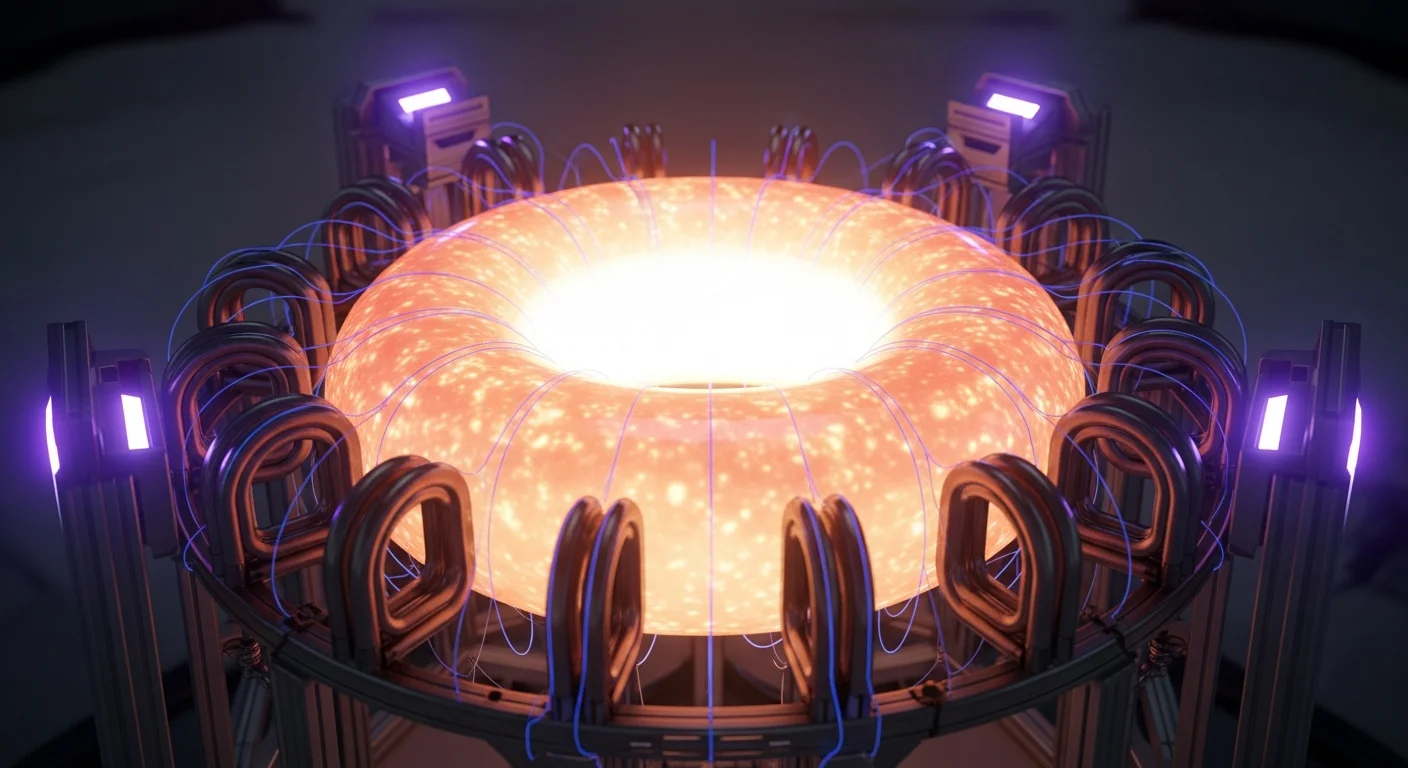
There is a moment, approximately four seconds into the SF-1 startup sequence, when the plasma in the pinch column reaches one billion Kelvin.
Not a million. Not ten million — the temperature at the core of the Sun, the temperature that drives the deuterium-tritium reactions in every conventional fusion program on Earth. One billion Kelvin. A hundred times hotter than the center of the Sun. A temperature that exists nowhere in the solar system except, briefly, in the throat of the SF-1 dense plasma focus column — and in the cores of the most massive stars in the galaxy during their final hours before collapse.
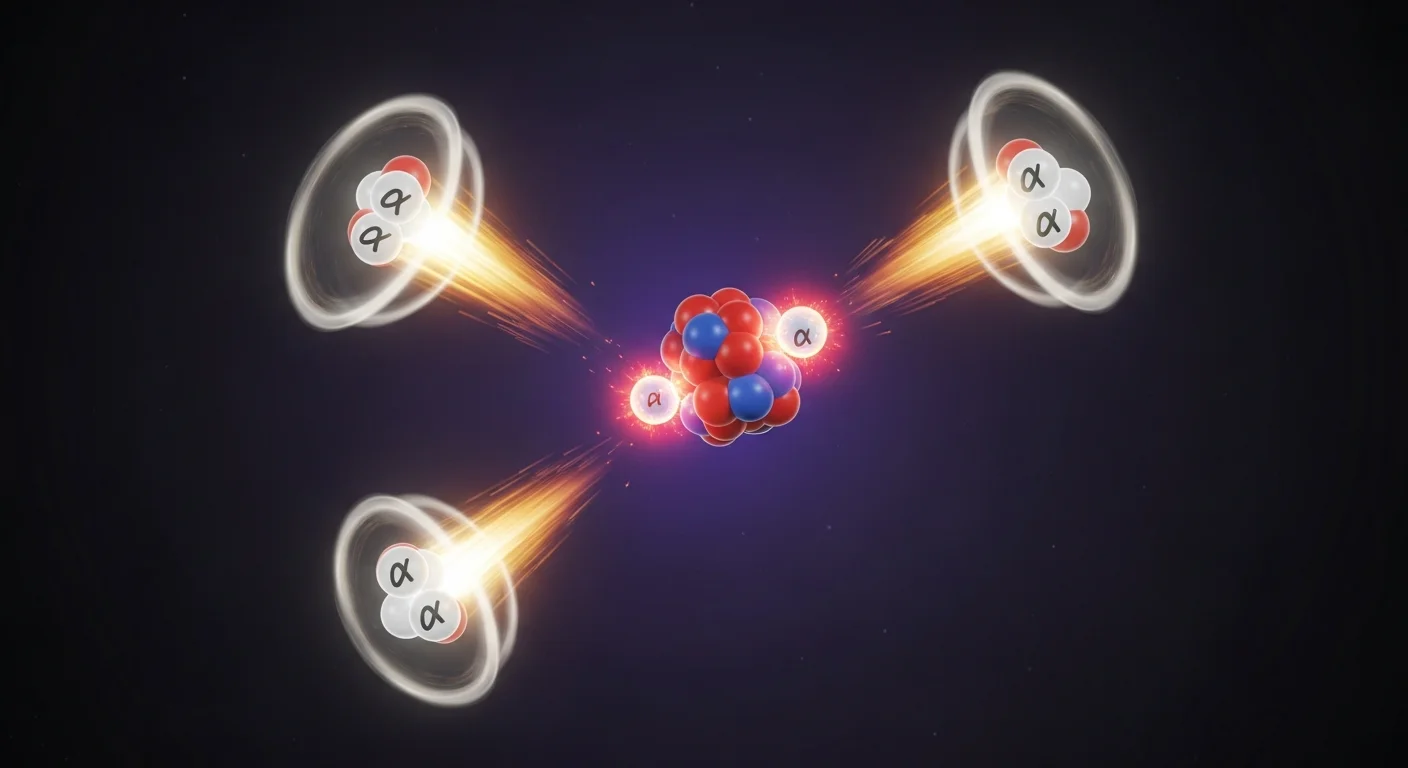
At one billion Kelvin, something happens that cannot happen at any lower temperature. A proton — the nucleus of a hydrogen atom, the simplest particle in the universe — collides with a boron-11 nucleus with enough kinetic energy to overcome the electrostatic barrier that has kept them apart since the beginning of the universe. They fuse. For an instant, they become carbon-12 — an unstable intermediate that cannot hold itself together at this energy. It immediately disintegrates into three helium-4 nuclei — alpha particles — each carrying 2.9 MeV of kinetic energy, flying apart at velocities approaching three percent of the speed of light.
No neutrons. No radioactive waste. No radioactive byproducts of any kind. The fuel goes in as hydrogen and boron. The products come out as helium — the same inert gas that fills party balloons and lifts weather instruments into the stratosphere. The energy comes out as three fast-moving alpha particles whose kinetic energy can be captured directly as electrical current, with no steam turbine, no thermal cycle, no Carnot efficiency limit.
This is the reaction that powers the Laks Industries technology spine.
The SF-1 is not a power plant in the sense that word has carried for a hundred and fifty years. It does not burn anything. It does not boil water. It does not rotate a generator. It does not produce waste that must be stored for ten thousand years in geological repositories. It produces no carbon. It produces no radioactive material. The fuel — hydrogen and boron — is available in essentially unlimited quantity: hydrogen from water, boron from seawater at concentrations that represent billions of years of supply at any conceivable consumption rate.
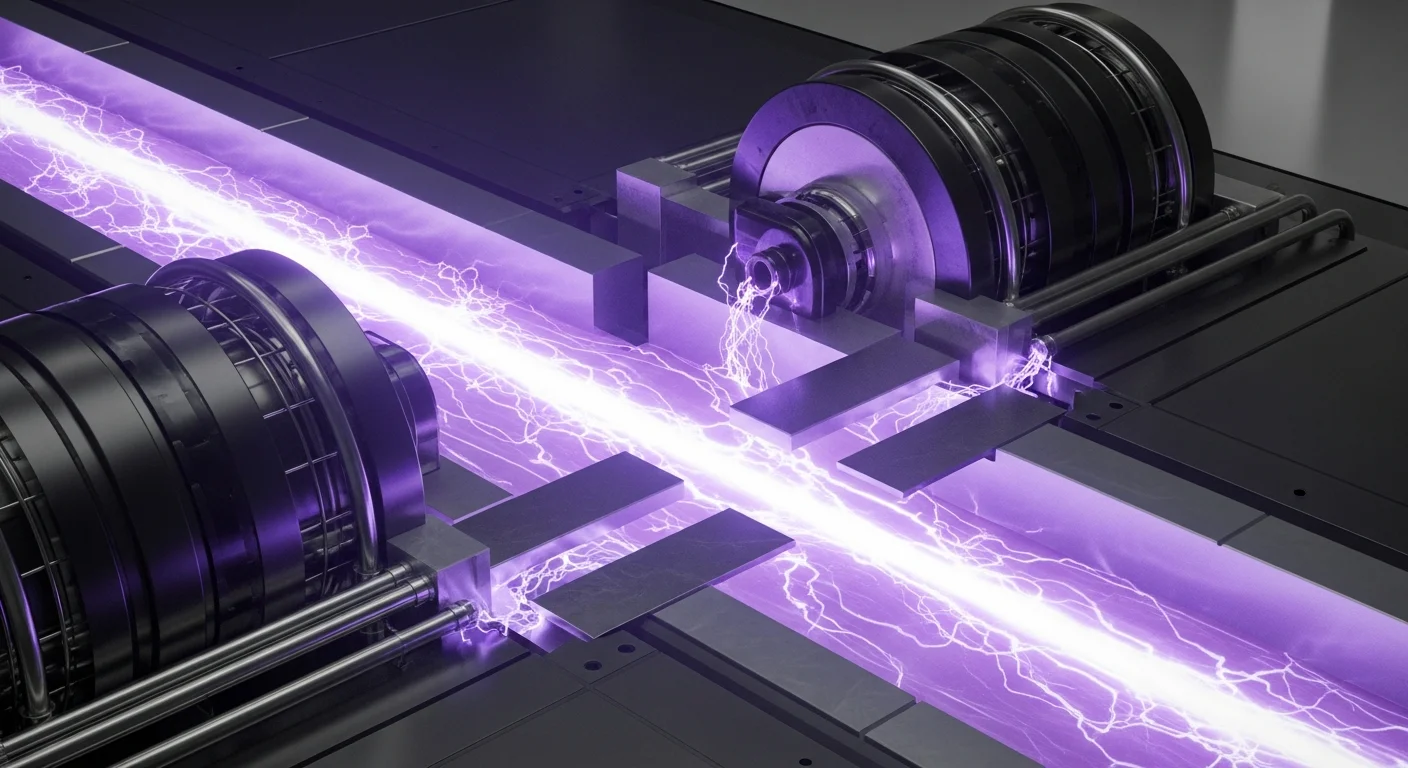
The SF-1 is a box. Eight cubic meters. Twenty-eight hundred kilograms. It fits in a large SUV’s footprint. It produces forty megawatts of continuous electrical output — enough to power thirty thousand homes, or one XR-1 plasma bubble craft in full-thrust operation, or one Metric Infrastructure terminal hub with enough margin to run the entire building around it.
It runs on a kilogram of fuel per year.
It does not require refueling in the conventional sense — the fuel consumption is so low that a single delivery of hydrogen and boron powder, made once per year by a technician with a briefcase, keeps the SF-1 at full output for the following twelve months. There is no fuel logistics infrastructure. No pipeline. No tanker. No regulatory regime governing delivery of hazardous materials. Hydrogen and boron are not hazardous. They are not flammable at the concentrations used. They are not toxic. Boron is a mineral supplement sold in health food stores.
The waste stream is helium gas. It is released to atmosphere. Helium is the second most abundant element in the universe and an inert noble gas that participates in no chemical or biological reactions. The regulatory classification of the SF-1 exhaust stream is: air.
Consider what this means for the infrastructure of civilization.
Every power system currently operating on Earth — coal, gas, nuclear fission, solar, wind, hydro — requires either continuous fuel delivery, continuous weather, continuous water flow, or continuous management of radiation and waste. Every one of them requires physical infrastructure that ties the power source to a specific geography. Coal plants sit next to rail lines. Gas plants sit next to pipelines. Nuclear plants sit next to cooling water and away from populations. Solar farms require land area proportional to their output. Wind turbines require wind.
The SF-1 requires none of these things. It requires a room. Any room, anywhere on Earth — or anywhere off it. The Lorentz Aerospace XR-1 flies the SF-1 to orbital altitude and runs the plasma bubble on the same power output that a conventional power plant delivers to a small city. The Metric Infrastructure Needle terminal at a deep-space installation runs on an SF-1 that was carried there through a wormhole throat in a single transit. A submarine fleet powered by SF-1 cores has essentially unlimited range — not the ninety days of a nuclear submarine, not the weeks of a diesel boat, but indefinite endurance limited only by consumables and crew.
The implications extend beyond mobility. The SF-1 is the technology that breaks the geographic correlation between energy and civilization. For the hundred and fifty years of the industrial era, the map of economic development has tracked the map of energy resource access almost exactly. Countries with coal built industries. Countries with oil built transportation empires. Countries with neither built neither. The SF-1 makes this correlation obsolete. Energy, at SF-1 scale, becomes as locationally neutral as mathematics.
The physics that makes this possible has been known since 1978, when Friedwardt Winterberg first calculated the conditions required for proton-boron fusion in a dense plasma focus geometry. The engineering that achieves it — the specific combination of pinch geometry, fuel injection timing, magnetic field configuration, and direct energy conversion architecture — took another forty years to develop. Stellar Furnace is the first organization to close the loop between the physics and the product.
The distance between what the physics permits and what the SF-1 delivers is not zero. The gap between laboratory demonstration of p-11B fusion in dense plasma focus devices — confirmed at LPP Fusion, at the Air Force Research Laboratory, in laser-target experiments at institutions across three continents — and the SF-1’s forty megawatt continuous output is a real engineering gap. This document characterizes it honestly.
But the physics is not speculative. The p-11B reaction cross-section has been measured. The dense plasma focus pinch geometry has been operating in laboratories since 1954. Direct energy conversion of alpha particle kinetic energy to electrical current has been demonstrated at forty-eight percent efficiency at the Tandem Mirror Experiment in 1981 and at higher efficiencies in subsequent laboratory work. Every physical phenomenon the SF-1 depends on has been experimentally confirmed.
The SF-1 is an engineering problem. It is a hard engineering problem. It is the hardest engineering problem Stellar Furnace has ever worked on. It is not a physics problem. The physics is done.
This document is the engineering decomposition of the SF-1 — from the nuclear reaction at one billion Kelvin through the dense plasma focus pinch geometry, the magnetic compression and timing architecture, the direct energy conversion system, the thermal management, and the complete operational specification. It begins where all fusion physics must begin: with the question of why p-11B requires a billion Kelvin when the Sun gets by on ten million, and what that difference means for the engineering that must achieve it.
The fire is real. The star is small. The furnace is building.
TABLE OF CONTENTS
Part I — The Nuclear Reaction
Coulomb barrier, quantum tunneling, Gamow peak, Lawson criterion (~3,600 words, 26 equations)
Part II — The Dense Plasma Focus
DPF history, geometry, pinch dynamics, Kruskal-Shafranov limit (~3,700 words, 20 equations)
Part III — Yield Optimization
Beam-target enhancement, current optimization, fuel injection (GAPs 1-3, ~4,000 words)
Part IV — Direct Energy Conversion
No turbine pathway, traveling-wave converters, space charge management (GAPs 4-5, ~3,300 words)
Part V — Stability and Control
Rep-rate operation, surrogate models, CMA-ES optimization (GAPs 6-7, ~2,900 words)
Part VI — Operations and Integration
Facility design, supply chain, market analysis, roadmap (GAPs 8-10, ~2,500 words)